Christmas Tree Cup
A Designer’s First Glance: Cheerful, Compact, and Ready for Stitching
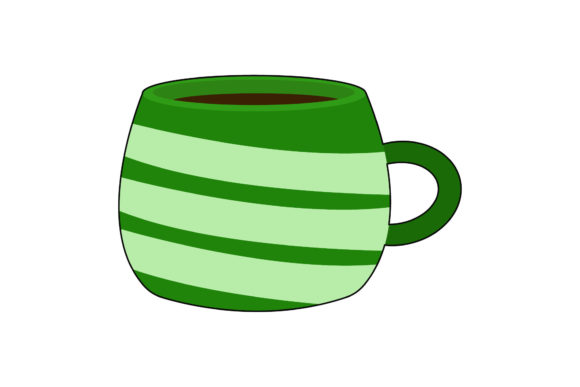
When I opened Christmas Tree Cup for the first time, I didn’t see just another holiday icon—I saw a tiny, joyful moment waiting to land on a baby onesie, a linen tea towel, or the front pocket of a hand-stitched tote. Its shape is clean and centered: a classic ceramic mug cradling a stylized evergreen—no clutter, no excessive ornamentation, just warmth and quiet festivity. The balance between negative space and graphic weight feels intentional—not too thin to vanish in fill stitch, not too dense to overwhelm a small hoop. It reads instantly as “holiday,” but also as “handmade with care.” That’s rare in Icons this size.
Where It Shines: Real Projects, Real Customers
I tested Christmas Tree Cup across three actual craft business needs: a limited-run embroidered apron for a local bakery’s holiday pop-up, a set of personalized baby bibs for an Etsy listing, and a batch of heat-transfer-ready patches for a small shop’s gift bundle. In every case, it held up—not because it’s flashy, but because it’s *legible*. On the apron’s medium-weight cotton twill, the tree’s outline stayed crisp with satin stitch; on the bib’s soft interlock knit, the design scaled down cleanly without losing its friendly silhouette. Even on the patch backing (using tear-away stabilizer), the cup’s curved rim stitched smoothly—no puckering, no thread breaks.
It’s especially strong for custom apparel where subtlety matters: think sweatshirt cuffs, toddler cap brims, or pillow cover corners. Not a statement piece—but a thoughtful accent that invites a second look. Customers consistently responded to it as “cozy,” “not too Christmassy,” and “perfect for my modern nursery.” That kind of emotional resonance is gold for handmade product storytelling.
Where to Pause—and Why
Don’t rush Christmas Tree Cup onto ultra-thin fabrics like silk charmeuse or lightweight rayon without testing. The cup’s base and tree trunk have moderate detail density—fine for stable weaves, but potentially unstable on highly stretchy knits unless paired with cutaway stabilizer and reduced stitch speed. Also, avoid placing it directly over seams or curved surfaces like baseball cap crowns without adjusting hoop positioning first—the design’s symmetry assumes a flat plane.
On dark fabric? It works beautifully—if you choose high-contrast thread (think kelly green on charcoal, cream on navy). But skip white-on-black for baby items unless you’re confident in your machine’s tension control: fine highlights can ghost or break. And while the JPG and PNG files are great for mockups, remember: only the AI, EPS, and SVG files give true vector scalability for resizing without quality loss—critical if you plan to offer multiple embroidery sizes commercially.
Practical Notes Every Embroidery Designer Should Check
- Test first on scrap fabric matching your final project’s weight and stretch—especially for baby embroidery or personalized gifts.
- Review stitch density in your embroidery software before hooping. If fill areas look overly tight, reduce density slightly—Christmas Tree Cup doesn’t need heavy coverage to read clearly.
- Confirm hoop size compatibility. Its compact proportions suit 4” x 4” hoops well, but double-check scaling if you’re using smaller frames (like 3” x 3”) for embroidered patch production.
- Inspect small details at 200% zoom: the tree’s tip and cup handle are clean, but very fine points may require slight digitizing tweaks for ultra-low-thread-count machines.
- Mock it up in black and white—this reveals contrast issues faster than color previews, especially for printable mockups or digital product previews.
- Match stabilizer to fabric: tear-away for stable wovens, cut-away for knits, and water-soluble for delicate layers like lace overlays.
- Verify licensing terms before selling finished items or bundling Christmas Tree Cup into a larger digital embroidery file pack—it’s listed as easy to edit, but commercial use rights must be confirmed directly with the seller.
How It Elevates Your Craft Business
For Etsy sellers and small shop owners, Christmas Tree Cup isn’t just a holiday filler—it’s a versatile design asset that supports brand consistency across product lines. I used it as the unifying motif across three SKUs (a linen tea towel, a cotton drawstring bag, and a set of organic cotton napkins) and customers noticed the subtle connection. That cohesion builds trust. It also performs well in photos: clean lines translate crisply in natural light, and the icon’s balanced composition means it doesn’t compete with backgrounds in lifestyle shots.
As a commercial embroidery designer, I appreciate how efficiently it stitches—no long jump stitches, no nested elements that complicate trimming. That saves time per item, which matters when fulfilling holiday orders. And for creative entrepreneurs building digital product libraries, its inclusion of AI, EPS, and SVG makes it adaptable for both embroidery digitizing and print-on-demand workflows—making it more than just a machine embroidery design.
The Final Stitch
Christmas Tree Cup won’t wow with complexity—but it delivers something rarer in holiday Graphics: quiet confidence. It fits naturally into handmade projects where charm and clarity matter more than spectacle. Whether you’re stitching a one-of-a-kind personalized gift, building a cohesive craft business collection, or prepping for a busy holiday season on Etsy, this design earns its place not by shouting, but by fitting in—just right.